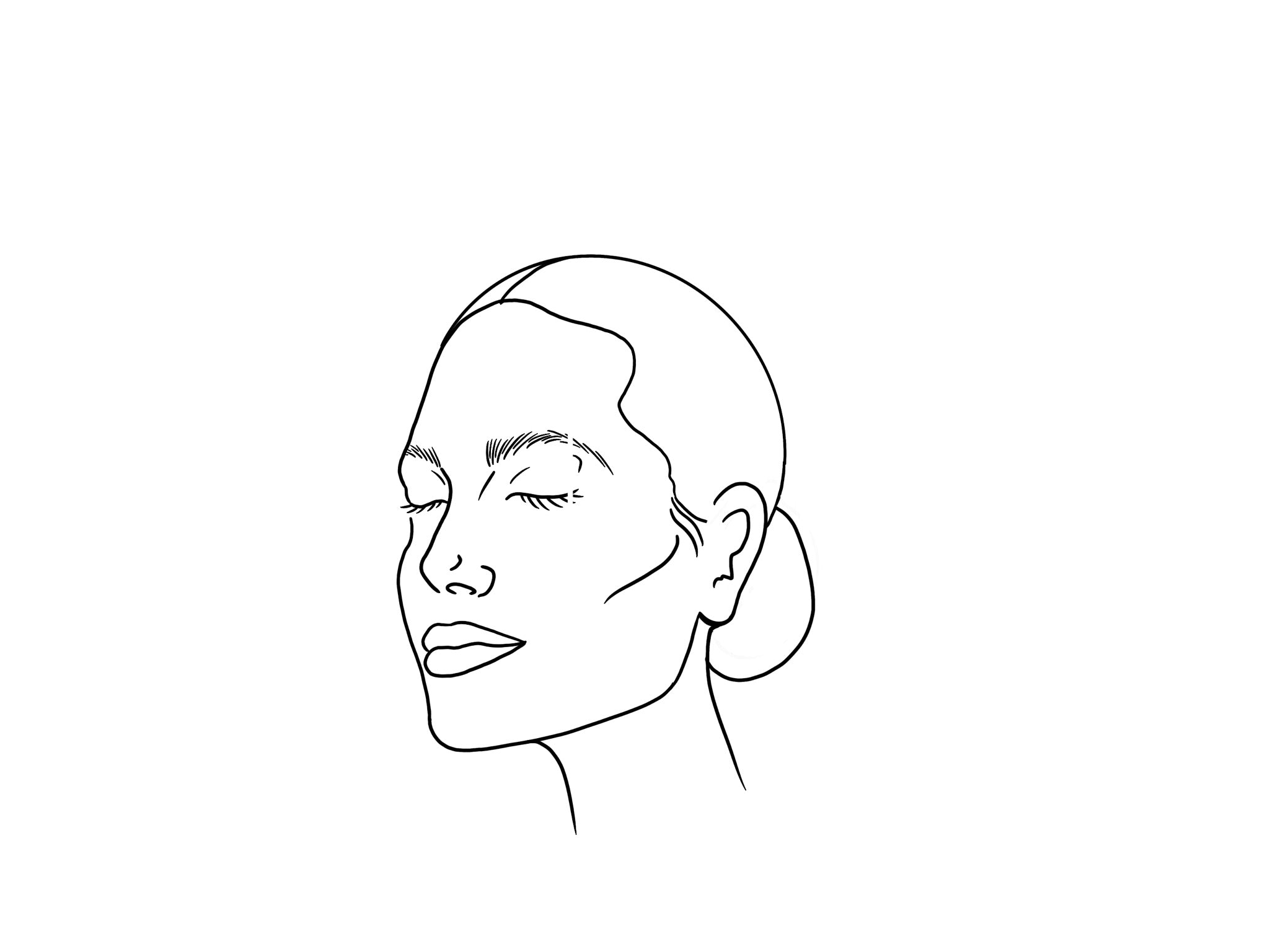
People ask why we built an entire course around brow mapping alone, when most brow education folds it into a single afternoon of a broader class. The honest answer is that mapping is the part of the service that determines everything else — the wax, the tint, the lamination, all of it is downstream of whether the shape you drew was actually right for that face. We wanted a course that treated it with that level of seriousness, and that's what led to a hands-on class launching in Santa Barbara this fall of 2022, now also available online for stylists who can't make it in person.
A lot of brow philosophy starts from the wrong assumption: that two brows should match like a matched set. They shouldn't. Brows are sisters, never twins — every face has natural asymmetry, and mapping that pretends otherwise produces a shape that fights the bone structure it's sitting on instead of working with it. Our approach starts from the actual face in front of you, not a template.
We teach both precision tools — calipers and rulers, for techs who want a repeatable, measurable system — and freehand technique, for artists who've built the eye to map confidently without them. Neither is "more correct." They're different tools for different stages of a stylist's development, and a lot of our strongest students end up using both, depending on the client and the day.
One thing we talk about openly in the course: brow PTSD is real. Almost every client sitting in the chair has a story about an over-plucked shape from a decade they'd rather forget, and that history shapes how nervous they are before you've even picked up a tool. Part of good brow mapping is the conversation before the mapping — understanding what a client is actually afraid of losing, and building trust before you touch a single hair.
The course itself walks through facial proportion assessment, natural growth pattern reading, symmetry philosophy, tool-based and freehand mapping technique, and enough live practice to build real confidence before you're doing it on a paying client. We built it because we think mapping deserves to be its own discipline, not a footnote — and the response from students so far has been the best confirmation we could ask for.
If you've taken the course, we'd genuinely love your feedback — what worked, what you wanted more of, and where your own artistry has taken the framework since.