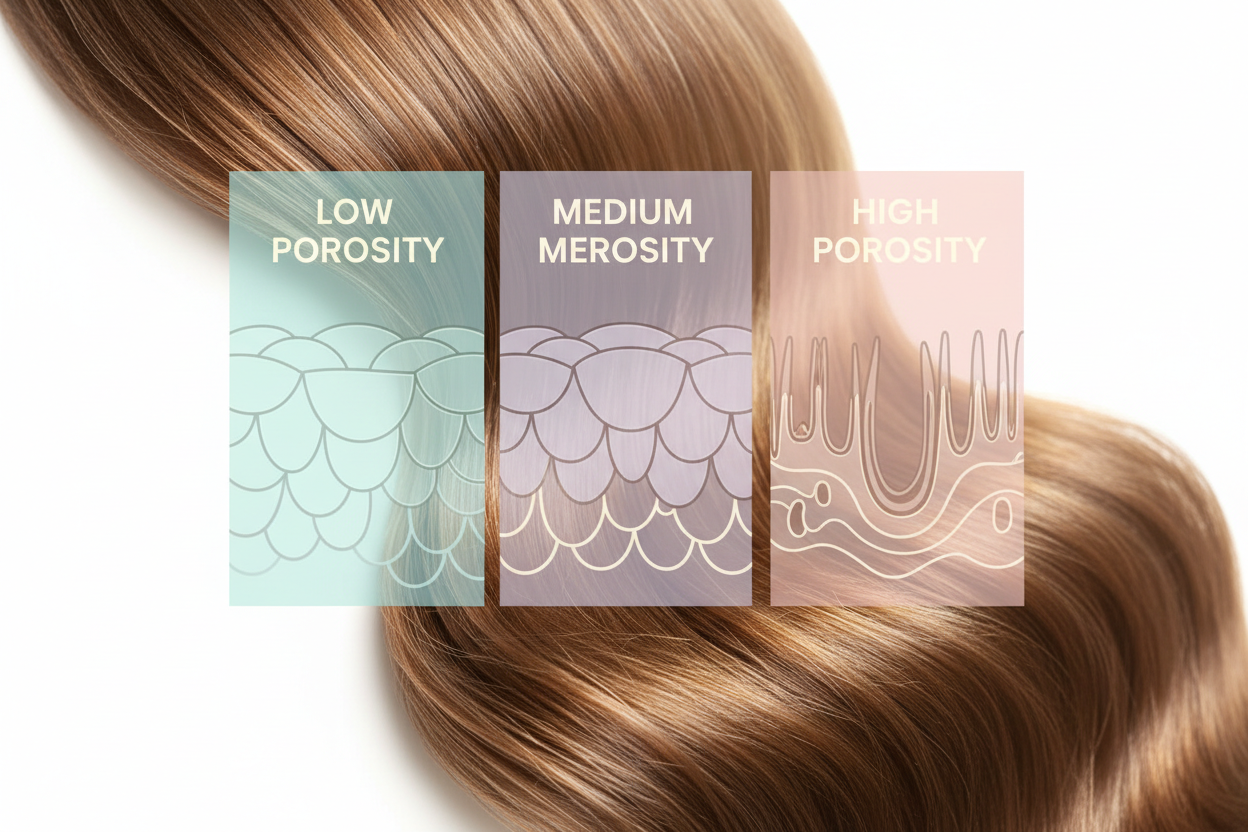
Every cosmetology program starts with the same foundation: skin and hair histology. It's easy to treat that early coursework as something you memorize for a test and move past, but porosity in particular is one of those fundamentals that quietly determines whether a lash lift, lamination, or tint delivers a gorgeous result or an over-processed one.
Hair is, structurally, a modified skin tissue — it shares the same basic cellular origin and goes through its own cycle of growth and shedding, the same way skin goes through desquamation as it renews itself. Skin absorption is also more significant than most people assume: a study published in the American Journal of Public Health found that skin can absorb roughly 64% of a contaminant's total dose through contact alone. That statistic is a useful reminder that whatever we're applying near the skin during a service isn't sitting inertly on the surface — it's being absorbed, and porosity is what determines how much and how fast.
Low Porosity
Low porosity hair has a tightly bound cuticle layer, which makes it naturally resistant to letting moisture and product in. This is the hair type most likely to look under-processed if you don't adjust your timing — solution has a harder time penetrating, so a standard processing time built for average porosity may simply not be enough. Low porosity hair often looks shiny and feels smooth to the touch, which is itself a diagnostic clue worth checking for during consultation.
Normal / Medium Porosity
Medium porosity hair sits in the sweet spot most product timing is built around — it absorbs up to roughly 31.1% of a product by weight, giving predictable, even processing without excessive intervention. Most of your standard service timing guidelines are calibrated for this porosity range, which is exactly why checking porosity matters: it tells you whether your client is the "standard case" your training assumes, or an outlier who needs an adjusted approach.
High Porosity
High porosity hair has a raised, more open cuticle structure, and can absorb up to about 55% of a product by weight — nearly double the medium-porosity rate. This hair type processes fast, and over-processing is a real risk if you don't shorten your timing accordingly. High porosity is common in hair that's been chemically treated, heat-styled, or is simply more mature, and it requires more attentiveness during processing rather than a "set it and check back later" approach.
None of this requires lab equipment to assess — a quick visual and tactile check before you begin (shine, texture, how quickly hair absorbs water) gives you enough information to adjust timing with confidence. Understanding porosity isn't academic trivia left over from school; it's one of the most practical tools you have for delivering a consistently excellent result instead of hoping the default timing works out.